Variables declaration in C++
Creating a variable reserves a memory location, or a space in memory for storing values. The compiler requires that you provide a data type for each variable you

Primary Insider is a collection of articles on different topics and programming languages for student programmer such as C, C++, Java, Tech News and other topics.
Creating a variable reserves a memory location, or a space in memory for storing values. The compiler requires that you provide a data type for each variable you
Comments are explanatory statements that you can include in C++ code to explain what the code is doing. The compiler ignores everything that appears in the comment,so
The cout operator does not insert a line break at the end of the output. One way to print two lines is to use the endl manipulator, which
C++ is a statically typed,general purpose programming language. C++ was derived C, band is largely based on it. Note: A programming language is said to used static
Main difference: C was originally developed by Dennis Ritchie at AT&T Bell Labs between 1969 and 1973. It has a free-format program source code. C
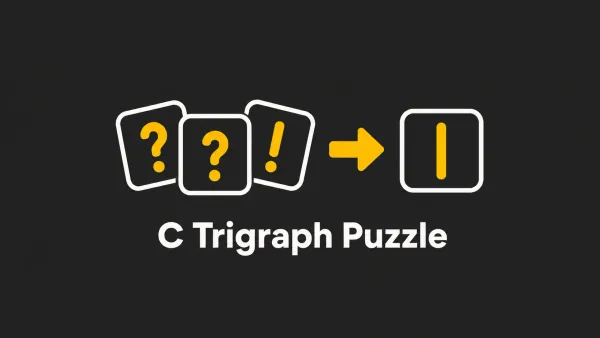
??! is a trigraph that translates to |. So it says: if(a || b){ ... }else{ ... } So, what is digraphs and trigraphs? In computer programming, digraphs and trigraphs are sequences of
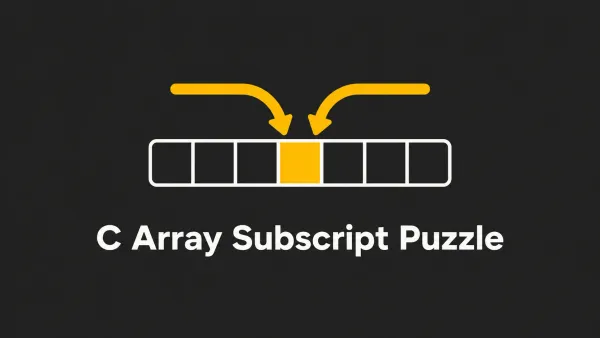
The C standard defines the Array Subscript Operator [] as follows: a[b] == *(a + b) Therefore a[5] will evaluate to: *(a + 5) and 5[a] will evaluate to:
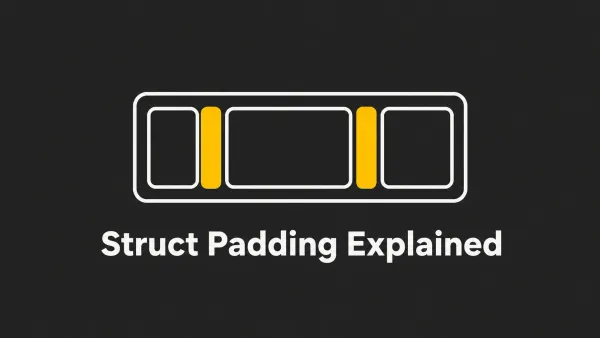
This is because of padding added to satisfy alignment constraints. Data structure alignment impacts both performance and correctness of programs. Here's an example using typical settings
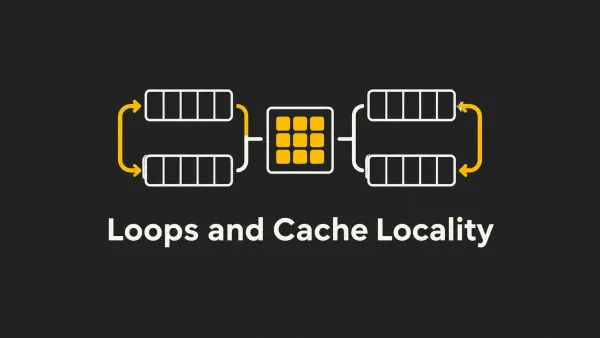
Suppose a1, b1, c1, and d1 point to heap memory and code has the following loop. const int n=100000; for(int j=0;j<n;j+
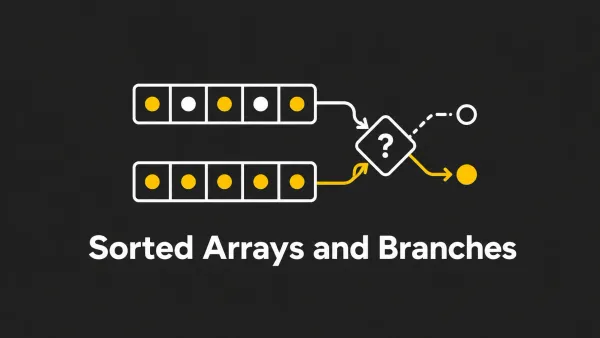
Here is a piece of Visual C++ code that seems very peculiar. For some strange reason, sorting the data miraculously makes the code almost six times faster. #include

The difference is in the location where the preprocessor searches for the included file. For #include "filename" the preprocessor searches in the same directory as the
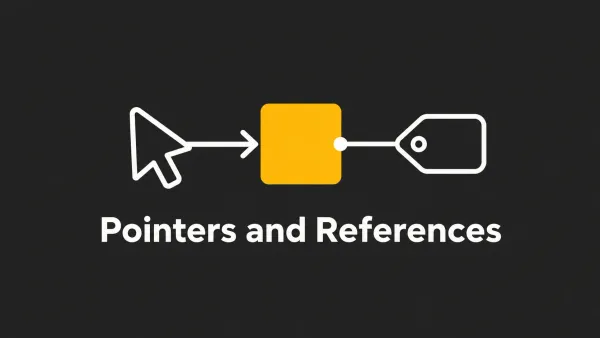
* A pointer can be re-assigned: int x = 5; int y = 6; int *p; p = &x; p = &y; *p = 10; assert(x == 5); assert(y == 10)
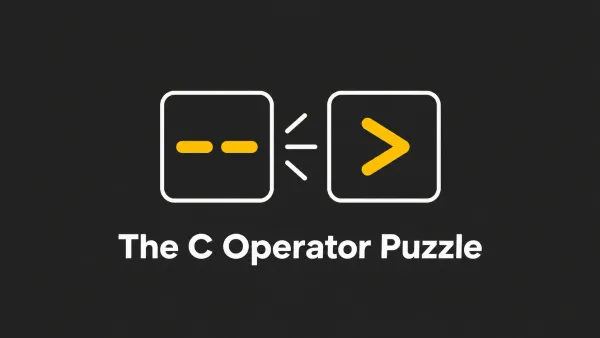
Here's an example: #include <stdio.h> int main() { int x = 10; while( x --> 0 ) // x goes to 0 { printf("%d ", x)
This quiz is based on this Loops in C tutorial including introduction to for loop, while loop, do while loop, break, continue statement, and goto. So, To get
S.No. Shortcuts keys Action 1 F1 For Help 2. F2 Save 3. F3 Open 4. F4 Go to cursor 5. F5 Zoom 6. F6 Next 7. F7